A cardiac emergency gives you minutes to act before a person’s heart or brain is damaged for good. Heart attacks and sudden cardiac arrest are separate events with separate warning signs. What you should do before the ambulance arrives depends on which of the two is in front of you.
In Australia, one person is hospitalised with a heart attack every nine minutes. Another 26,000 people go into cardiac arrest outside hospital each year and around 12% of those treated by paramedics survive. Both types of cardiac emergency can strike people with no known heart problems.
The Difference Between a Heart Attack and a Sudden Cardiac Arrest
A heart attack happens when a clot or a fatty deposit blocks a coronary artery and cuts the blood supply to part of a person’s heart muscle. Myocardial infarction is the medical name for this event. These deposits form inside the coronary arteries over years. The starved section of muscle is damaged a little more for every minute the blockage stays in place.
Sudden cardiac arrest is the moment a person’s heart stops pumping blood around their body. Each beat is timed by electrical signals the organ makes for itself. When those signals break down, the pumping stops with them.
The two are easy to confuse and simple to separate. A person having a heart attack can stay awake, talking, and breathing. A person in cardiac arrest cannot. In some people, damage from a heart attack upsets the electrical signals that keep their heart beating. One cardiac emergency can become the other within minutes.
Warning Signs of a Heart Attack
Heart attack symptoms can start mild and grow slowly, which makes them easy to explain away as indigestion or a strained muscle. The signs and symptoms also vary from person to person. People who take the mild versions seriously can get emergency treatment while more of their heart muscle can still be saved.
A person having a heart attack may feel:
- pain, pressure, heaviness, or tightness in their chest
- pain spreading to their arms, neck, jaw, back, or shoulders
- shortness of breath
- a cold sweat
- nausea or light-headedness
Their chest pain can fade and return. Mild pain is still treated as a warning sign.
Signs of a heart attack in women can centre on pressure or tightness rather than sharp pain, with discomfort in their neck, jaw, shoulders, upper back, or abdomen. Breathlessness and a sudden sense of being unwell can be the strongest signals a woman gets.
Symptoms of a heart attack mean a cardiac emergency is already underway, even when the person plays them down. Waiting to be sure costs time their heart muscle cannot spare.
Warning Signs Before Sudden Cardiac Arrest
Cardiac arrest can happen with no warning at all. For some people it is the first sign of a heart condition they never knew they had. A family history of fainting spells or unexplained sudden death can point to a higher risk of cardiac arrest. A GP is the right person to tell about that history. The warning signs to watch for are:
- tightness or pain in their chest during activity
- breathlessness out of proportion to the effort
- fainting or near-fainting, especially during exercise
- a racing, pounding, or irregular heartbeat
Signs of cardiac arrest at the moment it strikes are sudden. The person collapses, stops responding to voice or touch, and stops breathing normally. Gasping, snoring-like breaths can continue for a short time after their heart stops beating.
How to Respond to a Heart Attack

Heart attacks require immediate medical attention even when the person brushes them off. More of their heart muscle is lost for every minute this cardiac emergency goes untreated.
- Help the person stop what they are doing and sit them down.
- Call triple zero (000) and ask for an ambulance.
- Stay on the line, answer the call taker’s questions, and give aspirin only if they advise it.
- Loosen any tight clothing and keep the person calm and still.
- If the person stops responding and stops breathing normally, tell the call taker straight away.
If the person wants to drive to hospital or sleep the signs off, keep them seated and keep the call connected. Paramedics can begin emergency treatment on arrival and continue it on the road to the emergency department.
How to Respond to a Sudden Cardiac Arrest

When someone collapses in a cardiac emergency CPR stands for cardiopulmonary resuscitation. It is a combination of pushes on the person’s chest and rescue breaths given mouth to mouth, which keeps blood and oxygen moving while their heart is stopped.
An automated external defibrillator (AED) is a device that can shock the collapsed person’s heart back into a working rhythm. The device checks their heart rhythm and delivers a shock only when one is required. Every minute without CPR or a shock cuts the person’s chance of survival by about 10%.
- Check the scene is safe before you go near the person.
- Squeeze their shoulders and ask them to open their eyes.
- If there is no response, call emergency services on triple zero (000) and put the phone on speaker.
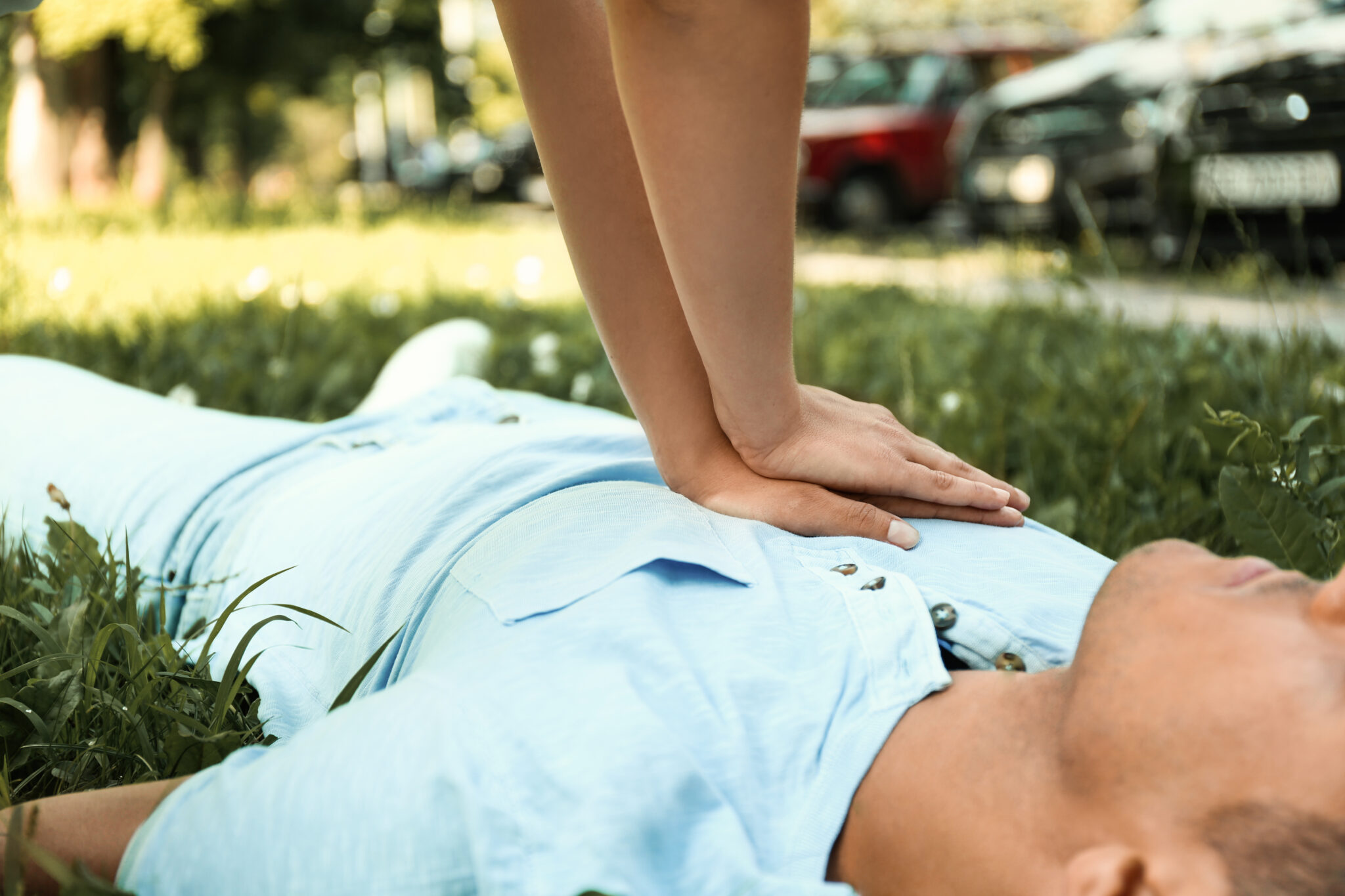
- Place the heel of one hand on the centre of their chest, put your other hand on top, and start CPR with hard, fast pushes at about two every second, letting their chest rise fully in between.
- Give them two rescue breaths after every 30 compressions if you have been trained in them, or keep pushing without a break if you have not.
- Send someone to bring back an AED. Switch it on and follow its voice prompts.
- Keep going until the person breathes normally, you cannot physically continue, or paramedics take over.
- If they start breathing normally, roll them onto their side and tilt their head back gently.
First Aid Training for Cardiac Emergencies
A cardiac emergency can begin anywhere. Until paramedics arrive, the only help the person gets comes from whoever is standing closest. People who spot the signs early get an ambulance moving sooner. Those who have learned what to do keep blood flowing while they wait.
The actions themselves are simple. Doing them for the first time on a stranger who is not breathing is another thing entirely. Our first aid courses put a manikin in front of you before life puts a person there. Enrol in first aid training and be ready to keep someone alive until the ambulance arrives.
FAQs
Can CPR Injure the Person?
Yes, firm chest compressions can crack the person’s ribs. However, this is not a reason to stop. Ribs can heal but cardiac arrest without CPR or a defibrillator can be fatal.
What Happens in a Heart Health Check?
A heart health check is an appointment where a GP measures blood pressure, cholesterol, and other risk factors. Your GP uses the results to estimate your risk of a cardiac event and to suggest changes that reduce the risk. Booking one is a practical step for anyone with heart disease in their family.
Can You Be Sued for Trying to Help?
No. Australian law protects bystanders who genuinely try to help at an emergency. No one in Australia has ever been successfully sued for giving that help.